Strategy of the Commons (Lamb and Powell 2026)

2nd Berlin PhD Conference in Applied Microeconomics, Wissenschaftszentrum für Sozialforschung Berlin

Felix Wortmann Callejón

July 7, 2026

Why should we care?

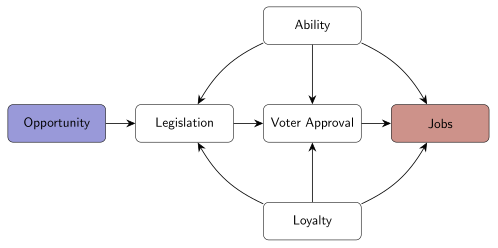
Learning about the mechanisms through which MPs build careers is a core question in the study of representation.

The paper studies two canonical such mechanisms: legislative ability and loyalty.

Lamb and Powell (2026) use a natural experiment in the UK House of Commons to identify the causal effect. Careful datawork, throughtful measurement, and disciplined inference make this paper stand out.

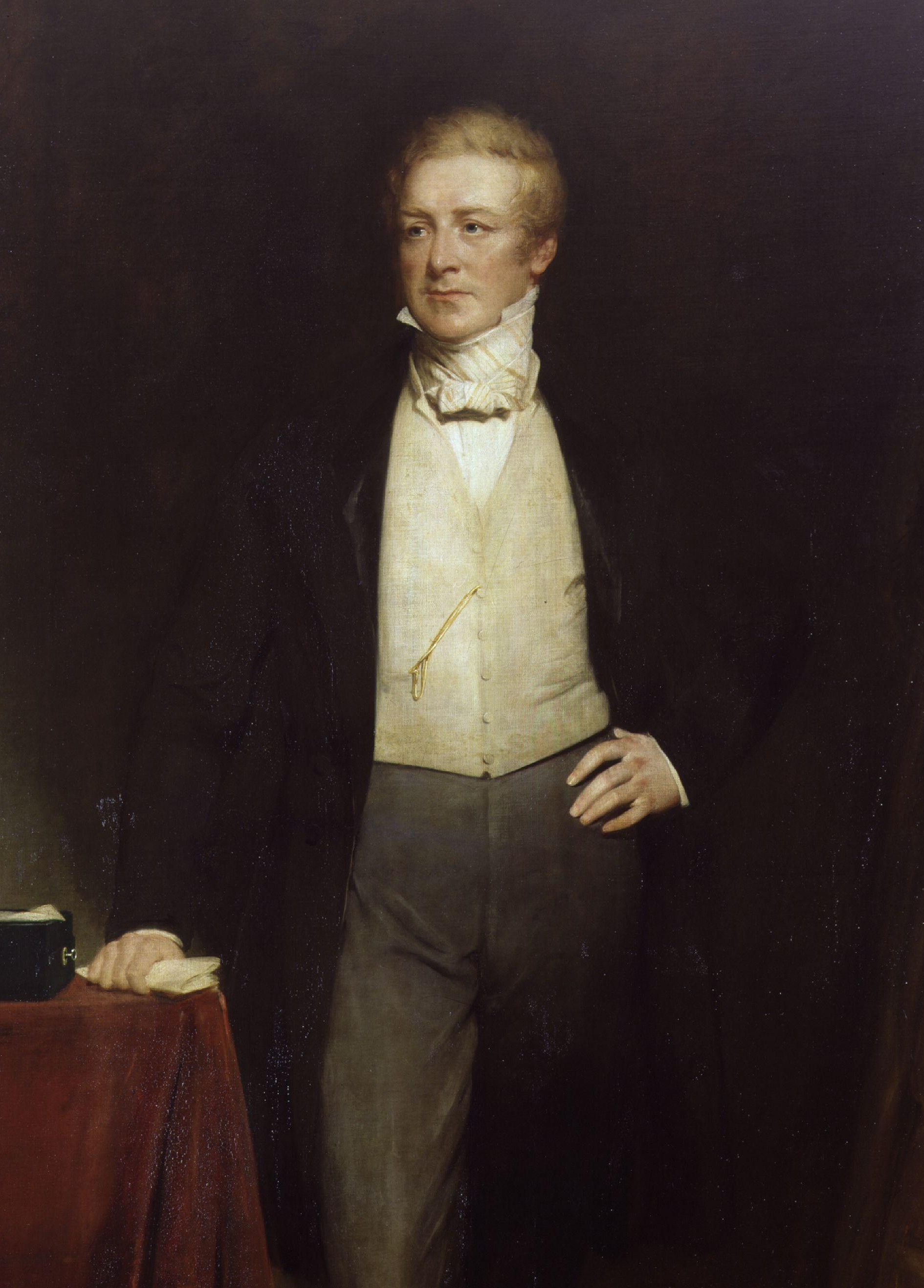
Bagehot on Sir Robert Peel

“A constitutional statesman is in general a man of common opinions and uncommon abilities.”
(Bagehot 1881, 2)

Portrait of Peel by Henry William Pickersgill

Learning About “Uncommon Abilities”

Legislation Reveals Type Through Two Channels
Channel Mechanism
Electoral MP reveals common opinions to voter
Informational Bill reveals MP’s uncommon abilities to party

Bueno De Mesquita and Tyson (2020) Thm. 1: Design recovers complete effect \(\iff\) party does not observe value of instrument

Legislation Reveals Type Through Two Channels

Legislation Reveals Type Through Two Channels

Channel Mechanism
Electoral MP reveals common opinions to voter
Informational Bill reveals MP’s uncommon abilities to party

Bueno De Mesquita and Tyson (2020) Thm. 1: Design recovers complete effect \(\iff\) party does not observe value of instrument

Design purges the informational channel: null speaks only to the electoral effect

Model Focuses Attention on Intra-Party Dynamics

MPs face dual principals:

  • Reliant on party for career advancement
  • Reliant on voters for re-election

But the party is also reliant on MPs to win seats. It faces a trade-off between advancing its optimal policy and housing a heterogeneous group of electable MPs.

MPs like Hayes Important to Party’s Electoral Calculus

John Hayes has been re-elected at every occasion since 1997 …

Source: Chris McAndrew via Parliamentary Digital Service.

MPs like Hayes Important to Party’s Electoral Calculus

John Hayes has been re-elected at every occasion since 1997 …

and has held five distinct positions in the cabinets of two prime ministers.

Source: Chris McAndrew via Parliamentary Digital Service.

Minor Points

  • Figure 5 relies on “Phantom Counterfactuals” (cf. Slough 2023)
  • Some more literature: Carson et al. (2010), Dewan and Hortala-Vallve (2011), Louwerse (2022), Rehmert (2022)
  • Paper formatting:
    • Consistency about footnotes before or after period (see 10, 11)
    • Number Appendix sections in order of appearance in text
    • Decide whether to include control estimates in regression tables or not

References

Bagehot, Walter. 1881. “The Character of Sir Robert Peel.” In Biographical Studies, ed. Richard Holt Hutton. London, UK: Longmans, Green, And Co., 1–39.
Bueno De Mesquita, Ethan, and Scott A. Tyson. 2020. “The Commensurability Problem: Conceptual Difficulties in Estimating the Effect of Behavior on Behavior.” American Political Science Review 114(2): 375–91. doi:10.1017/S0003055419000911.
Carson, Jamie L., Gregory Koger, Matthew J. Lebo, and Everett Young. 2010. “The Electoral Costs of Party Loyalty in Congress.” American Journal of Political Science 54(3): 598–616. doi:10.1111/j.1540-5907.2010.00449.x.
Dewan, Torun, and Rafael Hortala-Vallve. 2011. “The Three As of Government Formation: Appointment, Allocation, and Assignment.” American Journal of Political Science 55(3): 610–27. doi:10.1111/j.1540-5907.2011.00519.x.
Lamb, Joel, and Connor Powell. 2026. “Strategy of the Commons: Evidence from a Lottery in UK Parliament.” Working Paper.
Louwerse, Tom. 2022. “Moving Up or Down: Parliamentary Activity and Candidate Selection.” Journal of Legislative Studies 28(2): 216–42. doi:10.1080/13572334.2021.1885871.
Rehmert, Jochen. 2022. “Party Membership, Pre-Parliamentary Socialization and Party Cohesion.” Party Politics 28(6): 1081–93. doi:10.1177/13540688211039088.
Slough, Tara. 2023. “Phantom Counterfactuals.” American Journal of Political Science 67(1): 137–53. doi:10.1111/ajps.12715.